


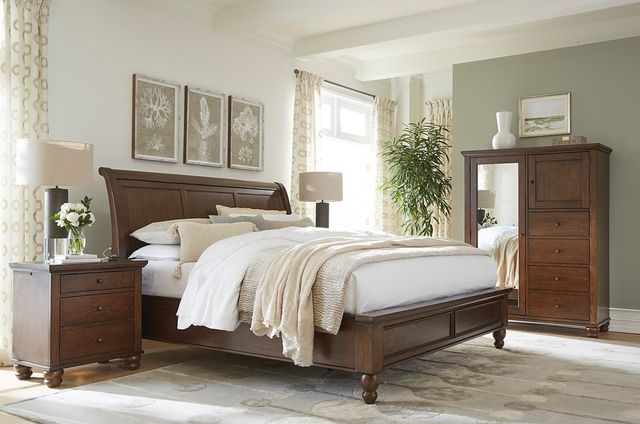
You reach for the water glass at two in the morning, and your hand lands on nothing but air, then drops another four inches onto a tabletop that sits well below the mattress. Every night it is the same small annoyance, and it never gets better. The other version of this problem shows up in daylight, when a bedside table that looked correct in a product photo turns out to crowd the bedroom door and shrink the walkway to a shuffle. Bedroom nightstands fail for reasons that have almost nothing to do with taste. They fail because three numbers went unmeasured before the order went in.
Here is the encouraging part: this whole decision comes down to three measurements and one style call, and none of them are hard. At Missouri Furniture, you can bring your numbers, compare finishes against real bed frames, and buy from people who will confirm the dimensions with you before anything ships. This guide walks through nightstand height and how to measure it correctly, width and depth sized to your bed and your walkway, whether you need one nightstand or two, the storage and charging features worth paying for, how to coordinate wood tone and finish without forcing an exact match, and what to do when the room is too tight for a traditional bedside table.
Find the Nightstand That Actually Fits Your Bed
Our team helps you match height, width and finish to the bed you already own, with real pieces to measure against in the showroom. Shop nightstands online or in person, with delivery, setup and financing available.
Explore bedroom nightstandsKey Takeaways
- Measure to the mattress, not the frame: Take the number from the floor to the top of the dressed mattress, then choose a nightstand top within about 2 to 4 inches of it so a lamp, phone or glass is reachable without twisting.
- Width follows the bed, depth follows the room: A nightstand should read as roughly one third to one half the width of the bed, while depth of 12 to 20 inches gets decided by how much walkway you can give up.
- Matching is optional, relating is not: Nightstands do not have to come from the same collection as the bed, but they do need at least one shared element such as undertone, sheen, hardware metal or leg style.
- Height is the element that must match on a pair: Two nightstands can differ in drawer layout or silhouette and still look intentional, as long as the tops land at the same height.
Nightstand Height: How Tall Bedroom Nightstands Should Be Compared to Your Bed
Start with the measurement nearly every guide gets vague about. Measure from the floor to the top of your mattress, not to the top of the bed frame and not to the headboard. The frame number is useless here, because the mattress is what your arm has to clear.
Once you have that number, choose a nightstand whose top sits within roughly 2 to 4 inches of it. Level with the mattress top or slightly above is the sweet spot. That way you can set down a glass or pick up a phone by moving your forearm, not by lifting your shoulder and rolling over.
The Standard Range and Why It Exists
Most bedroom nightstands measure about 23 to 28 inches tall. That range exists because mattress tops in a typical bedroom sit about 24 to 28 inches off the floor once a standard foundation and mattress are stacked. Match inside that band and you rarely go wrong.
Modern bed styles break the standard in both directions, though.
- Low platform beds and Japandi-style frames often put the mattress top around 18 to 22 inches, which calls for a 20 to 24 inch nightstand.
- Tall pillow-top mattresses, upholstered storage beds and traditional panel or sleigh beds can push the mattress top past 30 inches, which calls for 28 to 32 inches beside them.
- A mattress topper added after the fact can raise the surface another 2 to 4 inches, and a thick hybrid mattress can do the same.
- An adjustable base changes the height every time the head is raised, so measure it flat and accept that reading position will vary.
How to Take the Measurement
Do it with the bed dressed. Sheets, mattress pad and any topper in place, because that is the surface you actually reach across. Run the tape from the floor straight up to the highest point of the made bed, write the number on your phone, and treat it as the one figure you will not shop without.
Then compare that number against the listed dimensions on any product page before ordering, or bring it into the showroom and hold it against real pieces. Two inches is invisible on a screen and obvious in person.
When Taller Is the Right Call on Purpose
Going tall is sometimes deliberate rather than accidental. A chest-style bedside cabinet standing several inches above a low bed adds vertical interest to a wall that otherwise reads flat, and it buys drawer space in a bedroom that has no room for a dresser. In that case you are trading the easy reach for storage, which is a fair trade in a small room. Just do it knowingly instead of by mistake.
Read more:
- What to Look for in a Queen Storage Bed Frame
- Beautyrest Mattress vs. Other Top Brands: What Sets Them Apart?
How to Match Nightstand Width and Depth to Your Bed Size and Room
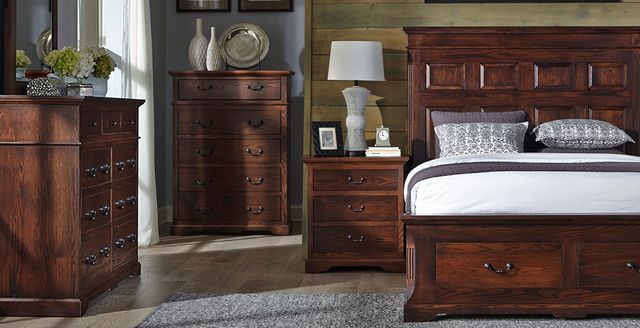
Proportion is easier to judge as a ratio than as a fixed number. Aim for a nightstand that reads as roughly one third to one half the width of the bed. That single rule stops a narrow table from looking lost beside a king and stops a wide chest from swallowing a twin.
Translated into the sizes people actually buy, the pairings look like this.
- Twin beds at 38 inches wide pair with 16 to 20 inch nightstands.
- Full beds at 54 inches pair with 18 to 22 inch nightstands.
- Queen beds at 60 inches pair with 21 to 26 inch nightstands.
- King and California king beds at 72 to 76 inches pair with 24 to 30 inch nightstands or a tall bedside chest.
Depth, Clearance and the Walkway
Typical nightstand depths run 12 to 20 inches. Shallow models at 12 to 16 inches suit tight rooms and beds that sit close to a wall. Deeper models around 20 inches earn their footprint when the drawers need to hold books, tablets, a spare blanket or the things that would otherwise pile on the floor.
Clearance is where good measurements get thrown away. Leave 3 to 6 inches between the bed and the nightstand so bedding does not drag across the top. Keep at least 24 to 30 inches of walkway on the open side, and more if the room gets used by two people at once. Then open a drawer in your head and check that it clears the bed rail, and swing the bedroom door in your head and check that it clears the nightstand corner.
The Floor-Plan Step Worth Five Minutes
Tape the footprint on the floor before you buy. Painter’s tape, a rectangle at the dimensions you are considering, right where the piece would live. Walk past it a few times and open the closet.
While the tape is down, look at what is behind that spot. Baseboards add half an inch to an inch and stop a case piece from sitting flush against the wall. Floor vents pushed under furniture stop heating a room. A wall outlet hidden behind a solid back panel becomes unreachable the day you need it.
Bed style changes the geometry too. Storage beds and upholstered beds usually have a frame footprint wider than the mattress, sometimes by 3 to 6 inches per side, and a wide upholstered headboard can eat the space where you planned to put the nightstand. Measure to the outside of the rails, not to the edge of the mattress.
Bedroom Nightstands Compared by Bed Size, Room Type and Storage Style
The first table sizes the piece to your bed and your room. The second compares the formats themselves so you can see what each one gives up.
| Bed Size or Room Type | Recommended Nightstand Height | Recommended Width | Typical Depth | Best Storage Style | Best For |
|---|---|---|---|---|---|
| Twin or bunk room | 22 to 26 inches | 16 to 20 inches | 12 to 15 inches | One drawer with open shelf | Kids, guests and tight corners |
| Full bed in a guest room | 23 to 27 inches | 18 to 22 inches | 14 to 17 inches | Two drawers | Occasional guests and light storage |
| Queen bed in a standard bedroom | 24 to 28 inches | 21 to 26 inches | 15 to 18 inches | Two or three drawers | The most common bedroom setup |
| King bed in a primary bedroom | 26 to 30 inches | 24 to 30 inches | 16 to 20 inches | Three drawers or bedside chest | Balanced scale beside a wide bed |
| Low platform bed | 20 to 24 inches | 18 to 24 inches | 14 to 18 inches | Open shelf or single drawer | Modern and Japandi bedrooms |
| Tall storage or pillow-top bed | 28 to 32 inches | 20 to 28 inches | 15 to 20 inches | Bedside chest | Reaching across a high mattress |
| Small bedroom under 10 by 10 feet | Match the mattress top | 14 to 20 inches | 12 to 14 inches | Floating or slim pedestal | Keeping the floor visible |
| Rental or shared bedroom | 23 to 28 inches | 16 to 22 inches | 12 to 16 inches | Lightweight freestanding | No wall mounting allowed |
| Nightstand Type | Storage Capacity | Visual Weight | Footprint | Dusting Effort | Hides Clutter |
|---|---|---|---|---|---|
| Two-drawer nightstand | Moderate | Medium | Standard | Low, wipe the top | Yes |
| One drawer with open shelf | Light to moderate | Light to medium | Standard | Medium, shelf collects dust | Partly |
| Open-shelf or ladder style | Light | Light | Small to standard | High, every surface shows | No |
| Bedside chest | High | Heavy | Deeper and taller | Low, few open surfaces | Yes |
| Floating or wall-mounted | Light to moderate | Light | No floor footprint | Low, floor vacuums clear | Usually |
| C-table or slim pedestal | Minimal | Very light | Very small | Low, one surface | No |
Read the first table for your bed and room, then read the second for how you live. If you want the floor to stay visible in a small bedroom, the floating and slim pedestal rows are the answer even though they store less. If clutter is the enemy, the drawer and chest rows win. Our team at Missouri Furniture can check both against a rough sketch of your room, including door swings and outlet locations, before you commit.
One Nightstand or Two: How to Decide What Works Beside Your Bed
Two matching bedroom nightstands create balance and are the standard choice for queen and king beds shared by two sleepers. A single nightstand is the right call for twin beds, beds pushed against a wall, and narrow rooms where only one side is usable.
Symmetry reads as intentional because the eye is looking for a frame. A matched pair brackets the bed, lines up two lamps at the same height, and turns the headboard wall into a composed arrangement instead of a bed with something next to it. There is a practical side too. Two sleepers need two lamps, two water glasses and two places to charge a phone, and sharing one surface across a queen bed means somebody is reaching over somebody else.
The Middle Ground Most Guides Skip
You do not have to choose between an identical pair and a random mismatch. There is a lot of usable ground between them.
- Two pieces from the same collection at the same height but with different drawer counts, so one side gets more storage.
- Two different pieces at the same height, unified by a shared finish or a shared hardware metal.
- A drawer nightstand on one side and an open-shelf piece on the other, tied together by matching lamps.
- A nightstand on one side and a small chest on the other in a room where only one sleeper needs storage.
Height is the element that has to match. Silhouette can vary more than people expect, because the tops are what your eye lines up across the bed. Two surfaces at the same height read as a pair even when the bases are different.
When the Sides Have Different Jobs
Real bedrooms are asymmetric. One person may need a deep drawer for medication and reading glasses, plus a flat surface with clearance for a CPAP machine and its hose. The other may need nothing but a spot for a book and a lamp. Buying two identical pieces to serve two very different routines is how one nightstand ends up empty and the other overflows.
And when a wall, radiator or closet door blocks one side entirely, a second nightstand is not the goal. A small bench at the foot of the bed, a compact dresser on the opposite wall, or an accent chair with a side table can absorb the same function without cramming furniture into a space that will not take it.
Drawers, Open Shelves and Built-In Charging: Choosing Nightstand Features That Fit Your Routine
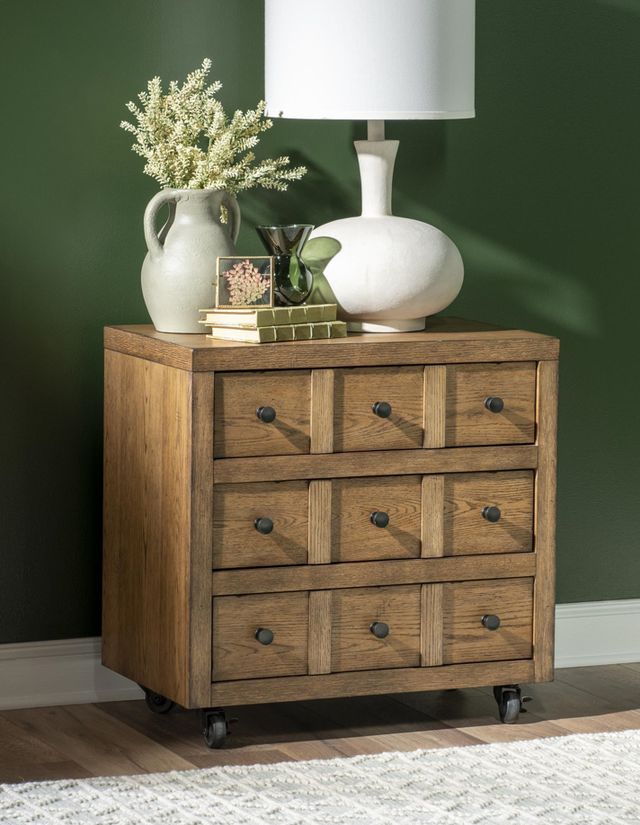
Storage format is a lifestyle question, not a style question. Closed drawers hide cords, medication, chargers and everything else you would rather not see from the doorway. Open shelves feel lighter in a small room and look best when what sits on them is worth showing, like a stack of books or a woven basket. Combination pieces with one drawer over an open shelf split the difference. Bedside chests, with more drawers and more depth, are the answer when the closet is full and the room has no space for a dresser.
Build Quality Signals That Predict Lifespan
Nightstands get opened every single day, which is more use than most case goods see. A few construction details separate the pieces that stay tight from the ones that start sticking in year two.
- Solid wood versus veneer over engineered wood, which changes how the piece handles humidity swings and how well it can be refinished later.
- Dovetailed drawer boxes, which hold their corners far longer than stapled butt joints under daily pulling.
- Ball-bearing or soft-close glides instead of plastic runners, especially on a drawer you open in the dark.
- A solid back panel fitted into a groove rather than a thin panel stapled on, since the back is what keeps the case square.
- A felt-lined top drawer, which is a small detail that protects watches, glasses and jewelry from rattling around.
Charging, Outlets and Cord Management
If your phone lives on the nightstand, buy for that. Look for integrated USB-A and USB-C ports plus at least one AC outlet, and check how that block is powered, because most built-in charging panels run on a cord that still has to reach a wall outlet. Measure that distance before you decide where the piece will sit.
Check the back panel for a cord routing hole too. A cutout lets the lamp cord and charging cable drop straight down behind the piece instead of looping across the top. On-board charging is tidier, and it keeps cords off the floor beside the bed, which matters in the middle of the night more than it does at noon.
Surface, Lamp Scale and Pulls
A lamp base, a phone, a glass and a book need more room than most people picture. Plan on a clear surface of at least 12 by 12 inches after the lamp is on it, and more if you keep a book stack. Lamp scale ties back to nightstand height: pick a lamp whose shade bottom lands near eye level when you are sitting up against the headboard, so the bulb is not glaring at you while you read.
Pulls matter more than they sound like they do. A recessed or bar pull is easy to find with your fingers in the dark. A small round knob on a flat drawer front is not.
Run This Checklist Before You Shop
- Floor to dressed mattress top, in inches.
- Wall space available beside the bed, wall to bed rail.
- Walkway you need to keep on the open side.
- What actually has to fit inside, from medication to books to a spare charger.
- Distance from that spot to the nearest outlet.
- Whether the room already has a dresser, or whether the nightstand has to carry the storage.
Matching Wood Tone, Finish and Style Between Your Bed and Nightstands
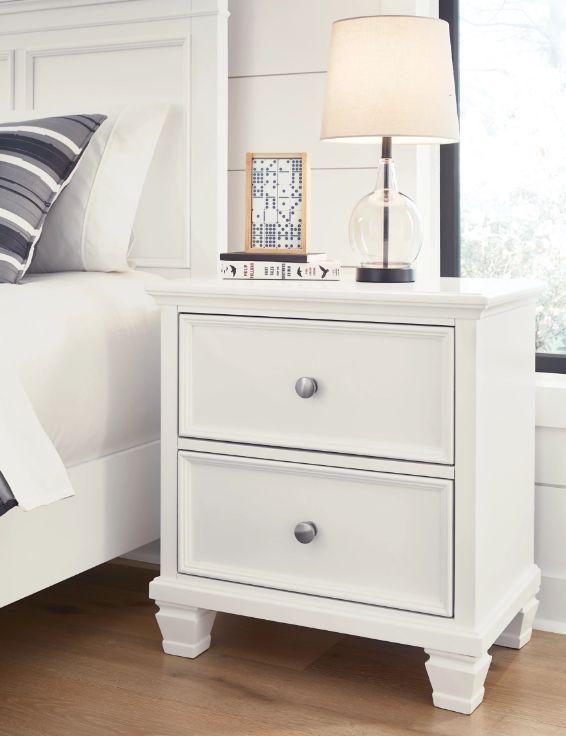
Here is the rule in plain terms: bedroom nightstands do not have to be an exact match to the bed, but they do have to relate to it through at least one shared element. Wood species, undertone, finish sheen, hardware metal or leg style will each do the job. Share one of those, and the room reads coordinated. Share none of them, and it reads like furniture that arrived on different trucks.
Learn to Read Undertone
Undertone is the part most shoppers never get taught, and it is the reason two brown pieces can look wrong together.
- Warm finishes pull yellow, orange or red. Honey oak, natural acacia, pecan and classic cherry live here.
- Cool finishes pull gray or blue. Greige, weathered gray and whitewash live here.
- Neutral finishes sit between. Walnut, espresso and matte black go with more than you would guess.
Two warm tones will coexist happily even at very different depths, which is why a light oak nightstand can stand beside a deep cherry bed without a fight. A warm honey tone next to a cool weathered gray is the pairing that goes wrong, because the two are pulling the room in opposite directions under the same light bulb.
Matching to Beds That Are Not Wood
Upholstered, metal and leather beds have no wood tone to match, which is freeing once you know where to look instead. Pull the nightstand finish from the metal in the headboard nailhead trim, from the finish on the bed frame legs, or from an accent color already in the bedding. A brass-toned nailhead headboard makes a case for brass hardware on the nightstands. Black metal bed frames sit well beside neutral walnut and matte black.
The Intentional Mixing Method
Mixing looks deliberate when three things stay under control. Keep height and scale consistent across the pieces. Repeat one metal finish across drawer pulls, lamp bases and any picture frames on the wall. Echo the bed’s line quality, meaning clean and rectilinear pieces with a clean modern bed, softer curves and turned legs with a traditional one.
Limit the room to two or three wood tones total, and count the floor as one of them. That last part catches people out, because a warm oak floor is already casting a tone across everything standing on it.
The dresser and mirror belong in the same plan. Buying an entire bedroom set within one collection guarantees the match and takes the decision off your plate, which is worth a lot when time is short. Shopping across collections costs more thought and buys you flexibility, plus a room that looks collected rather than ordered whole. Both approaches are legitimate, and our team can pull finish samples from several collections side by side so you can see the undertones together rather than on two browser tabs.
Bedroom Nightstands Pros and Cons: Matched Sets Versus Mixed Pairings
The real trade-off is between buying nightstands from the same collection as your bed and assembling a coordinated pair that does not technically match. Neither answer is wrong. The right one depends on your budget, the size of the room, and how long you plan to keep the bed you have now.
Pros
Guaranteed coordination
Buying within one collection means finish, sheen, hardware and scale were designed together, so nothing needs to be judged by eye or matched from a photo.
A faster decision
Choosing the matching nightstand from the collection you already bought takes minutes, where assembling a coordinated pair takes measuring, sample comparison and a few reversals.
Stronger hand-down and resale value
A complete bedroom set holds its appeal when it moves to a guest room, a grown child’s first apartment or the resale market, because buyers want the group rather than the orphan piece.
Easy future additions
When you later want a matching chest, bench or mirror, the collection is already established and the pieces are built to sit together.
Cons
Higher upfront cost
Committing to a full collection usually costs more than adding two coordinated nightstands to a bed you already own, especially when the bed still has years of life in it.
A flatter, showroom-like look
A room where every piece matches perfectly can read like a display rather than a home, and it leaves less room for the personality that a mixed pairing brings.
Read more:
- 6 White Bedroom Dresser Ideas to Brighten Your Space
- Stylish Living Room Table Sets for Different Needs
Small Bedroom and Floating Nightstand Ideas When Floor Space Is Tight
The threshold that decides this section is the gap between the side of the bed and the wall. Measure it. When that gap is under 18 inches, a traditional bedside table is going to fight you every day, and the alternatives start earning their keep.
- Wall-mounted or floating nightstands, which take zero floor space.
- Slim pedestal tables with a footprint barely larger than a lamp base.
- C-tables whose base slides under the bed frame while the top hovers over the mattress edge.
- Shallow 12 inch deep case pieces, which give you a drawer without the depth penalty.
How Floating Nightstands Actually Work
Mount the piece so the top lands level with the dressed mattress top, the same target from the height section. Mark that line on the wall with a level before drilling anything. The open floor underneath is the real payoff, since a vacuum passes straight through and a small room reads larger when you can see the floor running all the way to the baseboard.
Mounting hardware is the part to take seriously, and it is worth one specific warning from our team: a floating nightstand needs to land on wall studs or on anchors rated above the loaded weight of the piece, because most manufacturer warranties on wall-mounted case goods exclude damage caused by installation into drywall alone. If the studs do not fall where the bed does, a mounting cleat or a plywood backer spanning two studs solves it. While the wall is open or the plate is off, run a charging cable behind the mounting plate so nothing is visible from the front.
Vertical Alternatives Worth Considering
When the floor is spoken for, go up. A narrow bedside chest stores as much as a small dresser in a fraction of the footprint, which is the trade that makes it work in a room with no dresser wall. A wall shelf paired with a sconce covers the lamp and the surface at once. Headboard-integrated shelving handles a book and a phone in rooms where a table of any kind will not fit.
Rentals and shared bedrooms come with their own limits, since wall mounting is often off the table entirely. Look for lightweight freestanding pieces with a small footprint that two people can move without tools, and skip anything that needs to be anchored to stay upright.
Lighting deserves one last note here. When surface area is scarce, get the lamp off the nightstand. A swing-arm wall sconce or a clip light on the headboard frees the entire top for a glass, a phone and a book, which is often the difference between a 14 inch nightstand working and not working.
The Bedside Reach Test and the Surface Math Behind It
Before you shop, spend two minutes measuring how you actually use the space beside your bed. Lie down on your side of the mattress in your normal sleeping position and reach out without lifting your shoulder off the bed. For most adults that comfortable arc extends about 20 to 24 inches from the edge of the mattress, and anything past it requires sitting up. Now note where your hand naturally lands. That point, not the center of the wall, is where the nightstand top should be, and it is why a piece pushed 8 inches away to clear a baseboard heater can feel wrong even when every listed dimension is correct.
- Measure the reach arc from the mattress edge, then subtract the 3 to 6 inch gap between bed and nightstand to find your usable surface band.
- Lay out what lives bedside on a countertop and measure the rectangle it occupies, since a lamp base alone often claims a 6 to 8 inch circle.
- Add roughly 4 inches of clear margin around that rectangle, because a surface filled edge to edge gets knocked in the dark.
- Compare the total against nightstand tops of 15 by 18 inches, 18 by 20 inches and larger, and let the smallest one that clears become your floor rather than your target.
- If the math comes up short, move the lamp to the wall before you move up a furniture size, since lighting is the easiest item to relocate.
- Check the arc a second time from a seated reading position, because the reach from propped up against the headboard is shorter than it is lying down.
Read more:
- Ashley Furniture Reviews: What to Know Before You Buy
- Why Missouri Furniture Has Been a Family Favorite Since 1977
Bedroom Nightstands Worth Considering at Missouri Furniture
The six pieces below cover the full spread this article walked through, from customizable made-to-order nightstands you can finish to match a bed you already own, to a tall bedside chest for storage-heavy rooms, to a crisp white piece built for contrast. Match each one to your measurements and your existing bed rather than to a photo. All are available with delivery and setup, and financing options are available.
Mavin Customizable Longmeadow 28” Nightstand
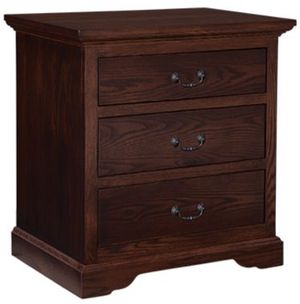
This is the answer to the hardest matching problem in the article: you already own a bed you like, and nothing on a shelf quite matches its finish. Because this Longmeadow piece is customizable and made to order, the finish becomes a choice rather than a gamble, which means the undertone can be selected to sit with your existing bedroom set instead of near it. At 28 inches wide it lands in the range recommended for queen and king beds. Bring your mattress-top measurement and a finish reference, and our team will walk the options with you.
Top Features
- Customizable made-to-order build: The finish is specified when the order is placed, so it can be chosen to relate to the bed you already own.
- 28 inch width: Sits inside the 24 to 30 inch band this article recommends beside king beds, and reads well beside a queen.
- Solves the orphan bed problem: A practical route when the original collection is no longer available.
- Guided ordering: Finish and configuration decisions are made with staff who know the collection rather than from a thumbnail.
Liberty Furniture Paradise Valley Saddle Brown Bedside Chest
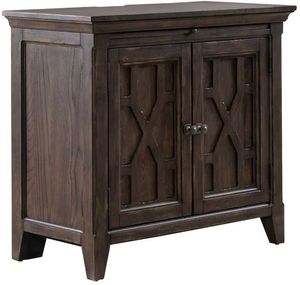
A bedside chest is not the same thing as a nightstand, and that difference is the point here. A chest stands taller and runs deeper, with more drawers stacked into the same wall space, which makes it the piece to reach for beside a tall pillow-top or storage bed where a standard 24 inch table would sit too low. It is also the fix for a bedroom with no room for a dresser. The saddle brown finish is a warm mid-tone that coordinates easily with other warm woods across collections.
Top Features
- Chest proportions: Taller and deeper than a standard nightstand, which suits high mattress tops and tall headboards.
- Stacked drawer storage: Absorbs the overflow in bedrooms where closet or dresser space has run out.
- Warm saddle brown finish: A mid-tone that sits comfortably beside honey, pecan and other warm-undertone beds.
- Vertical footprint: Adds storage without claiming more floor than a regular bedside table.
Aspenhome Cambridge Classic Cherry Nightstand
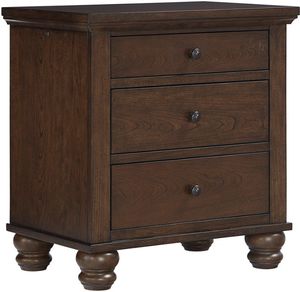
Traditional bedrooms built around a panel or sleigh bed want a nightstand with the same weight, and classic cherry is the finish that delivers it. Cherry sits firmly in the warm undertone group covered earlier, pulling red and gold, which means it coexists with honey oak and pecan even at a different depth of color. Put it beside a cool weathered gray bed and the clash is immediate, so use this one where the room is already warm. The Cambridge styling suits formal primary bedrooms and rooms with darker hardwood floors.
Top Features
- Classic cherry finish: A warm, red-leaning tone that anchors traditional and transitional bedrooms.
- Undertone compatibility: Coordinates with honey, pecan and other warm woods without needing an exact match.
- Traditional proportions: Built to hold its own beside panel and sleigh beds rather than disappear next to them.
- Collection styling: Part of a broader Cambridge look for shoppers who want more pieces to relate.
Legacy Classic Vintage Market Barnwood Oak 3-Drawer Nightstand
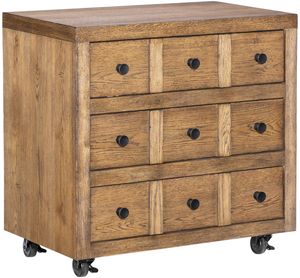
Barnwood oak is where the intentional contrast strategy pays off. The weathered, visible grain gives a rustic and farmhouse bedroom texture that a smooth painted piece cannot, and it also plays well against upholstered beds in oatmeal or gray where there is no wood tone to match at all. Three drawers put it in the storage-heavy group from the comparison table, which is the right pick when the closet is full and the top needs to stay clear. Pair it with black or bronze hardware repeated on the lamp base.
Top Features
- Barnwood oak character: Visible grain and a weathered treatment that add texture to rustic and farmhouse rooms.
- Three drawers: Enough closed storage to keep the top surface clear in a room without a dresser.
- Works against upholstered beds: A wood tone that reads deliberate beside fabric headboards with no finish to match.
- Hardware-friendly styling: Takes black or bronze metal well, which makes repeating one metal across the room simple.
Signature Design by Ashley Fortman White Nightstand
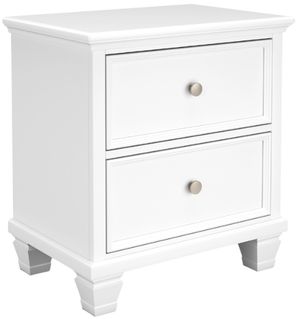
White is the reset button when a bedroom has too many wood tones already fighting for attention. Because it carries no competing undertone, this Fortman piece can sit beside a warm oak bed or a cool gray one without picking a side, which makes it the easiest coordination choice on this list. It also bounces light in a small or north-facing bedroom, where a dark finish visually shrinks the corner. Use it to hold the two-or-three-tone limit recommended earlier when the floor and the bed already account for both.
Top Features
- Neutral white finish: Coordinates with warm and cool beds alike, so it never fights the existing wood tones.
- Brightens tight rooms: Reflects light in small or dim bedrooms where a dark piece closes the corner in.
- Keeps the tone count down: A practical way to stay within two or three wood tones once the floor is counted.
- Contrast against dark beds: Reads as a deliberate design move rather than a mismatch beside espresso or black frames.
Archbold Furniture Customizable Alder Shaker 3-Drawer Nightstand
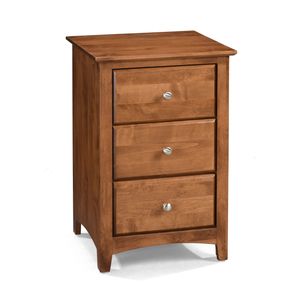
Shaker design is the quiet answer for shoppers who want a nightstand that will not look dated in eight years. Flat drawer fronts, straight legs and no ornament mean this piece relates to modern, traditional and farmhouse beds alike, which is exactly the line quality point made earlier. It is built from solid alder and customizable, so the finish can be specified rather than accepted, and three drawers cover the storage-heavy case. Choose it when the bed has a clean rectilinear silhouette and the room needs substance without decoration.
Top Features
- Shaker simplicity: Flat fronts and straight lines that coordinate across modern, traditional and farmhouse bedrooms.
- Solid alder construction: A solid wood build rather than veneer over engineered panels.
- Customizable finish: Specify the tone at order time so it relates to a bed you already own.
- Three drawers: Closed storage for medication, cords and books in rooms short on dresser space.
Your Bedside Blueprint: Choosing Bedroom Nightstands That Finish the Room
It comes down to four moves. Measure from the floor to the dressed mattress top, size the width and depth to your bed and the walkway you need to keep, decide honestly whether you need one nightstand or a pair, then coordinate finish and hardware instead of forcing an exact match. Get those right and the piece beside your bed stops being an afterthought.
Browse bedroom nightstands online at Missouri Furniture, or come see heights and finishes side by side against real beds in the showroom, where two inches of difference is obvious in a way no product photo can show. Our team will check your measurements against actual dimensions before anything is ordered, pull finish samples from several collections so you can compare undertones in person, and help with customizable pieces that can be built to relate to the bed you already own. Delivery and setup means the nightstand arrives placed and ready rather than in a box on the porch, financing options are available, and if a drawer glide needs attention two years from now, you call local people who know your order. That is what an independent Missouri retailer offers that a big-box shelf or an online-only checkout does not.
Frequently Asked Questions about Bedroom Nightstands
A nightstand top should sit within about 2 to 4 inches of the top of your dressed mattress, ideally level with it or slightly above. That range keeps a lamp, phone or glass within easy reach so you are not lifting your shoulder off the bed to get to it.
No, nightstands do not have to match the bed frame, but they do need to relate to it through at least one shared element such as wood undertone, finish sheen, hardware metal or leg style. Sharing a single element is what makes a mixed pairing read as coordinated instead of accidental.
A queen bed at 60 inches wide pairs best with a nightstand 21 to 26 inches wide. That keeps the piece at roughly one third to one half the width of the bed, which is the proportion that looks balanced rather than undersized.
Two nightstands are standard for queen and king beds shared by two sleepers, while one works for twin beds, beds against a wall and rooms with only one usable side. Two sleepers need separate lamps, surfaces and charging spots, which is a practical reason as much as a visual one.
Leave 3 to 6 inches between the bed and the nightstand, and keep at least 24 to 30 inches of walkway on the open side. That gap stops bedding from dragging across the nightstand top while keeping the surface inside comfortable reach.
Yes, mixing wood tones works as long as the tones share an undertone and the room stays within two or three tones total, counting the floor. Two warm finishes coexist even at different depths, while a warm honey tone beside a cool weathered gray is the pairing that tends to clash.
Why Trust Missouri Furniture
Missouri Furniture is the furniture store of choice for homeowners across Missouri, offering an extensive selection of high-quality furniture, appliances, mattresses, and home essentials. With beautifully designed showrooms, competitive pricing, and a strong commitment to customer satisfaction, Missouri Furniture makes it easy to create a home you love.
Family-owned and locally operated since 1977, Missouri Furniture has built a trusted reputation for exceptional service and quality products. With decades of experience, their team is dedicated to helping customers find the right pieces to match their lifestyle, style preferences, and budget. From comfortable living room furniture and stylish bedroom sets to durable dining collections, mattresses, appliances, and even hot tubs, Missouri Furniture carries a wide range of products from trusted brands. Whether you’re furnishing a new home, upgrading a single room, or designing a custom space, Missouri Furniture offers the selection, expertise, and value you can rely on.
Shop Bedroom Nightstands at Missouri Furniture
Explore a wide selection of quality home furnishings and exceptional customer service at Missouri Furniture. Visit one of their showroom locations throughout Missouri to experience the latest styles, comfort innovations, and home solutions from trusted brands.
Since the beginning, our family-owned business has been dedicated to helping customers transform their houses into homes with personalized service and expert guidance. Their knowledgeable team is ready to help you find the perfect furniture, mattress, appliance, or home accessory to fit your space and lifestyle. Browse the online catalog or contact your nearest Missouri Furniture showroom to get started today.