


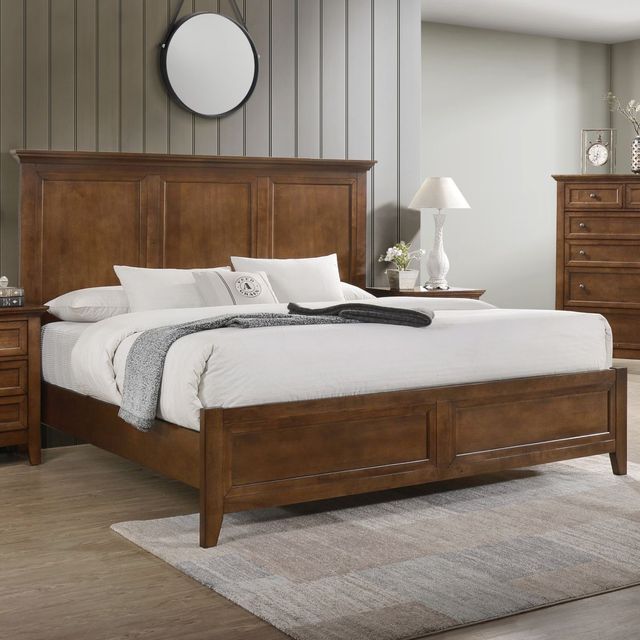
The mattress sits on a bare metal frame with the plastic feet showing, and every morning the pillows have migrated down behind it and landed on the baseboard. Someone added a lamp, then a rug, then two more throw pillows, and the room still reads like a place where furniture is stored rather than a bedroom. The problem is not the bedding or the paint. The wall behind the bed has nothing on it, which is exactly the gap a panel bed is built to fill, and it is the single change that finishes a room faster than anything else you can buy.
Give Your Bedroom the Anchor It Has Been Missing
Missouri Furniture carries bedroom furniture from lines our team knows piece by piece, serving Columbia, Jefferson City, Camdenton, Sedalia, Kirksville, and beyond. Compare finishes and panel detailing in person, then let us handle delivery, assembly, and service long after the sale.
Explore panel bedHere is what makes this an easy fix rather than a project: a panel bed does the visual work of a headboard wall, a footboard, and a finished frame in one purchase, and choosing the right one comes down to four decisions you can make with a tape measure. At Missouri Furniture, our team helps shoppers across mid-Missouri and the Lake of the Ozarks area sort through sizing, materials, and support requirements every week. This guide covers what defines a panel bed, how it compares to the alternatives, how to size it to your room, the materials and finishes that set the look, styling that makes the bed the focal point, what actually drives price, and our seven picks.
Key Takeaways
- A panel bed is defined by its structure: Headboard, footboard, and side rails, named for the flat or decorative panels set into the headboard and usually the footboard.
- Foundation requirements vary by model, not by category: Some panel beds require a box spring or foundation, and some ship with a slat system rated to support a mattress on its own.
- The frame is bigger than the mattress: Rails, headboard, and footboard add several inches of width and length, which is what turns a tight bedroom into a very tight bedroom.
- A center support rail decides longevity on queens and kings: Center legs carry the load that would otherwise flex the side rails, and their absence is the most common cause of a bed that squeaks.
What Is a Panel Bed? Construction, Components, and Terminology
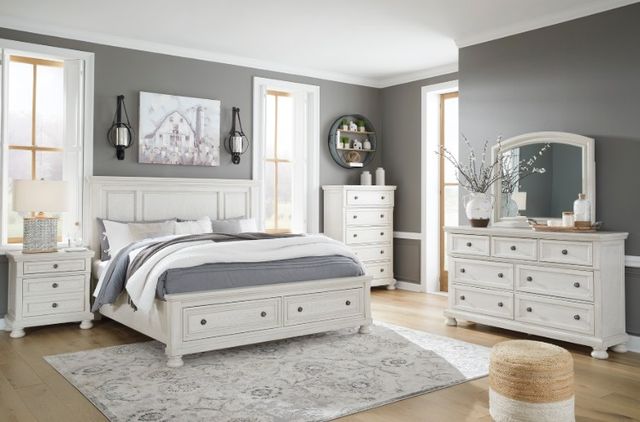
A panel bed is a bed frame built from three structural parts: a headboard, a footboard, and two side rails that connect them. The name comes from the panels set into the headboard, and usually the footboard too, which may be flat and recessed, raised and framed, slatted, shiplapped, or upholstered.
The full component list is short, and every part matters:
- Headboard: The tall vertical piece against the wall, which carries the design identity of the bed.
- Footboard: The matching piece at the foot, usually shorter than the headboard.
- Side rails: The two long members that connect head to foot and carry the mattress load.
- Slats: Wood or metal cross members spanning the rails to support the mattress or foundation.
- Center support rail and legs: A lengthwise member with legs to the floor, standard on queen and king sizes.
Assembly is bolt-together or hook-together. Hook rails drop into brackets cast or routed into the headboard and footboard posts and are quick to assemble but rely on gravity and a snug fit. Bolted rails use through-bolts into threaded inserts and stay tight longer, though they take more time and a wrench. Either way, the center support rail with legs is not optional on a queen or king. It carries the middle of the mattress load straight to the floor, and beds assembled without those legs are the ones that develop a sag and a squeak.
Does a Panel Bed Need a Box Spring?
The honest answer is that it depends on the specific model rather than on the category. Traditional panel beds were designed around a box spring and a mattress, and many still are. Newer designs ship with a closely spaced slat system rated to support a foam or hybrid mattress directly, with no foundation required.
The deciding factor is slat spacing. Most foam and hybrid mattress warranties require continuous support with gaps no wider than about three inches, and many manufacturers void coverage if the mattress sits on widely spaced slats. Check the mattress warranty and the bed’s specification together, because getting this wrong can cost you the mattress rather than just some comfort.
Profile is the other consequence. A panel bed with a foundation sits higher than a low platform frame, which many people prefer for getting in and out of bed, and which changes what nightstand height works alongside it.
Panel Bed vs Platform Bed vs Sleigh Bed: Key Differences
Shoppers weigh a panel bed against four or five alternatives, and the differences are structural rather than decorative.
- Platform bed: A built-in slat or solid base that supports the mattress directly, no foundation needed. Sits lower to the floor and usually has a minimal or absent footboard. Reads modern and keeps a small room feeling open.
- Sleigh bed: Curved or scrolled headboard and footboard that both flare outward. Consumes noticeably more floor length than a panel bed with the same mattress, and reads traditional or formal.
- Storage bed: Drawers built into the base or the footboard. Requires no foundation in most cases and can replace a chest of drawers in a room with shallow closets.
- Upholstered bed: Fabric or leather over a padded headboard panel, sometimes tufted or channel stitched. Softer against the back for reading in bed, and more demanding to keep clean.
- Canopy or poster bed: Tall corner posts, with or without a top frame. Dramatic in a room with nine-foot or taller ceilings and overwhelming in a room with eight.
The panel bed versus platform bed comparison is the one people search most, so here it is plainly. The difference is the mattress support and the resulting height. A platform bed supports the mattress on its own built-in base and sits low. A panel bed may or may not require a foundation, and when it does, the mattress top ends up several inches higher. Visually, a platform bed usually has little or no footboard while a panel bed almost always has one.
That footboard changes how a room feels. A tall footboard closes off the foot of the bed, defines the space, and makes a large room feel appropriately filled. In a narrow bedroom where you walk past the foot of the bed to reach a closet, that same footboard becomes an obstacle and a shin bruise. Low-footboard designs exist precisely to solve this.
The hybrid category is worth recognizing on a spec sheet. Many beds now sell panel styling with a platform-style slat system, giving the headboard and footboard presence of a panel bed with no box spring required. Identify them by looking for the phrases no foundation required, mattress-ready, or a listed slat count and spacing, and by checking whether the listed mattress height leaves the headboard panels visible above the pillows.
Sizing and Room Fit: Choosing the Right Panel Bed Dimensions
Standard mattress sizes are fixed, and the bed frame around them is not. Twin runs 38 by 75 inches, twin XL 38 by 80, full 54 by 75, queen 60 by 80, king 76 by 80, and California king 72 by 84. The panel bed built for each adds material on every side.
Expect a panel bed frame to add roughly two to five inches of width beyond the mattress, since the rails sit outside the mattress and the headboard posts sit outside those. Expect it to add roughly four to ten inches of total length, because the headboard and footboard each occupy real thickness beyond the mattress ends. A queen panel bed is frequently 65 inches wide and 88 inches long overall, not 60 by 80.
Plan clearances deliberately:
- Leave about 30 inches on each side of the bed you use for getting in and out, and at least 24 inches on a side that is mostly for making the bed.
- Leave 30 to 36 inches at the foot if that is a walkway to a closet or bathroom.
- Check that the bedroom door and any closet doors swing fully clear of the bed and nightstands.
- Allow nightstand width plus a few inches of breathing room between the stand and the headboard post.
Headboard height should relate to both mattress size and ceiling height. A tall headboard on a king in a room with nine-foot ceilings reads balanced; the same headboard in an eight-foot room with a ceiling fan can feel like it is pressing down. Watch what the headboard covers, too, since a tall panel can land directly over a window sill, a wall sconce, or the bottom edge of a piece of art.
Measure for delivery before you order. Doorway width, hallway width, and the diagonal clearance at every stair turn matter more than the bedroom itself, and a tall king headboard is the piece most likely to fail at a landing in an older two-story home.
Small Bedrooms and Low Ceilings
- Choose a low-profile footboard so the walkway at the foot of the bed stays usable.
- Consider a headboard-only configuration with a metal frame when floor length is the binding constraint.
- Favor lighter finishes and open or slatted panel designs, which read less solid than a full raised panel.
- Step down a mattress size before you compromise on walkways, since a full with 30 inches of clearance beats a queen with 14.
- In rooms under eight-foot ceilings, keep headboard height moderate and hang art beside the bed rather than above it.
Read More: What to Look for in a Queen Storage Bed Frame | How to Pick Bedroom Nightstands That Match Your Bed
Materials, Finishes, and Style Directions That Define the Look
Material sets both the price and the behavior of a panel bed over time.
Solid hardwood in oak, maple, cherry, or pine is stable, repairable, and refinishable. It moves with humidity, which is a genuine consideration in Missouri, and it costs the most. Engineered wood with veneer puts a real wood face over a dimensionally stable core, which resists warping better than a wide solid panel and costs less. Metal accents appear as strapping, corner brackets, or full metal panel inserts, adding an industrial note. Upholstered panel inserts in fabric or leather soften the headboard for reading in bed and are the most demanding to keep clean.
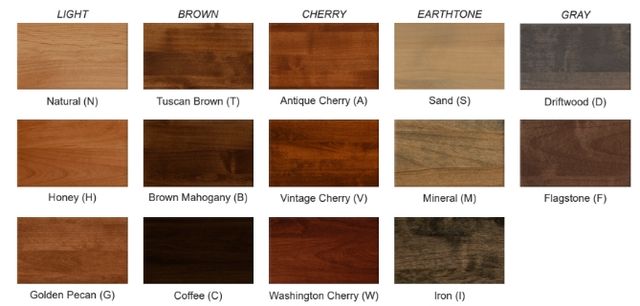
Finish choices carry more design weight than the panel shape does:
- Light oak and natural tones: Open a room up, hide dust well, and read modern or coastal.
- Warm walnut and cherry: Traditional, rich, and forgiving of minor scratches because the color varies naturally.
- Painted white and gray: Bright and clean, and the easiest to coordinate with mismatched existing pieces.
- Black and espresso: Graphic and dramatic, and the least forgiving on dust.
- Distressed and whitewashed: Hide wear by design, which suits a room used hard by kids or pets.
Panel construction details set the style direction. Flat recessed panels read modern or transitional. Raised panels with molding read traditional. Shiplap and slat detailing read farmhouse or coastal. Tufted or channel-stitched upholstery reads glamorous or contemporary. Nailhead trim pushes toward traditional or transitional depending on the finish it borders.
Care differs by material. A catalyzed finish on wood resists water rings and cosmetics far better than a simple lacquer. Distressed and open-pore finishes hide scratches but hold dust in the grain. Upholstered panels need vacuuming with a brush attachment and spot cleaning appropriate to the fabric code, and light-colored upholstery near a headboard picks up hair product and skin oils faster than anyone expects.
The most common worry we hear is about mixing wood tones with existing nightstands and a dresser, and the answer is that matching exactly is neither necessary nor especially attractive. Coordinate by undertone rather than by shade. If your existing pieces run warm, meaning they carry red, orange, or yellow in them, choose a bed that also runs warm even if it is several shades lighter or darker. Mixing a warm cherry nightstand with a cool gray-brown bed is the near-miss that reads as a mistake, while pairing that same cherry with a distinctly lighter warm oak reads as deliberate layering.
Read More: 6 White Bedroom Dresser Ideas to Brighten Your Space | Transform Your Home with Our Unbeatable Furniture Selection
Styling a Panel Bed: Bedding, Lighting, and Layout
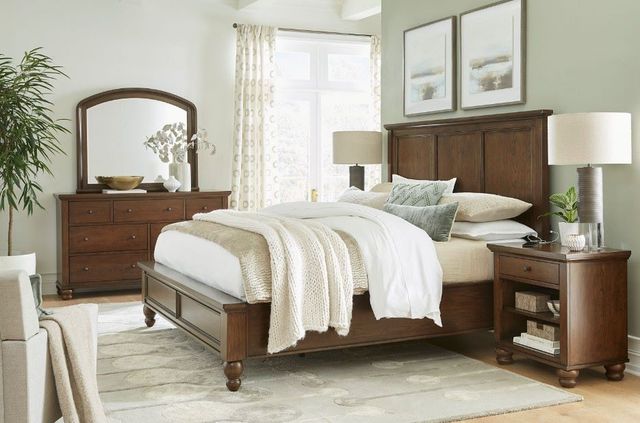
The bed is the focal point whether you plan for it or not, so plan for it. Center the bed on the longest uninterrupted wall when possible, and resist centering it on a wall that has a window unless the headboard sits below the sill. If the room has two candidate walls, choose the one that gives you the better walkway on both sides rather than the one with the better view.
Bedding should flatter the panels rather than bury them. A duvet or coverlet in a color that contrasts with the finish makes the headboard read as a frame. Keep pillow stacks at a height where the top of the pillows sits below the top of the headboard panels, so the design you paid for stays visible. A bed skirt hides the rails and reads more traditional; leaving the rails exposed reads cleaner and modern, and works best when the rail finish matches the rest of the bed exactly.
Lighting is where most bedrooms fall short. Size table lamps so the bottom of the shade lands near eye level when you are sitting up in bed, which usually means a lamp between 24 and 28 inches tall on a standard nightstand. Wall sconces mounted beside the headboard free the nightstand tops entirely and are worth the wiring in a small room. A pendant on each side is a striking alternative, hung so the bottom clears the nightstand by at least a foot.
Rug placement follows a simple rule. A rug that runs under the bottom two-thirds of the bed and extends 24 to 30 inches past the sides gives you something soft underfoot when you stand up, which is the entire point. Anything smaller floats. Nightstand height should land within a couple of inches of the mattress top, and remember that switching to a thicker hybrid mattress later moves that target.
Contrast strategy depends on the finish. A dark panel bed in a light room becomes a graphic anchor and needs very little else on the wall. A painted white bed against a patterned wallpaper disappears unless the bedding introduces a strong solid to separate them. Neutral walls behind a mid-tone wood bed give you the most freedom to change bedding seasonally.
Fixing the Two Most Common Complaints
Pillows sliding down behind the headboard is a gap problem, not a pillow problem. It happens when the mattress and foundation sit forward of the headboard face, leaving an inch or two of open space. Fix it by pulling the mattress fully against the headboard, adding a firm bolster or a long lumbar pillow across the back of the stack, or fitting a foam gap filler between the mattress and the headboard.
A footboard that feels visually heavy is a proportion problem. Fix it by draping a folded quilt or throw across the footboard to break the solid plane, by choosing bedding that extends over the footboard edge, or by placing a low bench in front of it so the eye reads two horizontal layers rather than one tall wall.
Quality, Budget, and What Drives the Price of a Panel Bed
Price in this category tracks a handful of specific things rather than brand prestige alone. Solid wood costs more than engineered wood with veneer. Mortise-and-tenon or doweled joinery costs more than screwed butt joints. A multi-step catalyzed finish costs more than a single-coat lacquer. Upholstered panels add cost with fabric grade. Storage drawers add mechanisms, and mechanisms add cost and eventual service.
Check these before you buy:
- Rail thickness and material: Thin or hollow rails flex under load and are the first thing to fail.
- Slat count and spacing: More slats, closer together, means better mattress support and warranty compliance.
- Center support rail and legs: Non-negotiable on queen and king, and worth confirming the legs are included.
- Hardware quality: Steel through-bolts into threaded inserts beat wood screws into raw particleboard every time.
- Drawer glides on storage models: Full-extension glides on a heavy underbed drawer, not partial-extension.
- Headboard rigidity after assembly: Push the top corner sideways once assembled and feel whether it moves.
Noise and shifting are the most common long-term complaint about any bed, and both come from the same source: fasteners loosening as wood expands and contracts. Bolted construction with metal-to-metal contact at the joints stays quiet longer than hook-and-bracket construction with wood rubbing on wood. Felt or nylon washers at the rail joints and a center leg with a solid floor contact eliminate most of the rest.
Warranty coverage on bedroom furniture generally covers manufacturing and structural defects for a stated term and excludes normal wear, finish fading from sunlight, damage from moving the bed, and anything caused by assembly errors. Store protection plans typically extend into accidental damage such as specific stains on upholstered panels and structural breakage. Compare the two before buying so you are not paying twice for the same coverage.
Budget across the whole room rather than just the bed. Most shoppers buy the bed first and add nightstands, a dresser, and a mirror over the next year or two. If you know you want the full room eventually, buying a coordinated bedroom set at once is usually less expensive per piece and removes the risk of the collection being discontinued before you finish. If you want the room to feel collected rather than matched, buy the bed now and note the exact finish name, so later purchases can be coordinated by undertone rather than guessed at.
Read More: Ashley Furniture Reviews: What to Know Before You Buy | Why Missouri Furniture Has Been a Family Favorite Since 1977
Panel Bed Styles and Materials Compared Side by Side
| Panel Bed Type | Construction | Style Fit | Foundation Needed | Care and Durability | Best For |
|---|---|---|---|---|---|
| Solid wood | Hardwood panels and rails | Traditional, farmhouse, rustic | Varies by model | Refinishable, moves with humidity | Long-term keepers |
| Veneered wood | Wood face over engineered core | Transitional, modern | Varies by model | Stable, not refinishable | Wide rooms, humid climates |
| Upholstered | Padded fabric or leather panels | Contemporary, glam | Usually required | Vacuum and spot clean | Readers, softer rooms |
| Storage panel | Drawers in base or footboard | Transitional, casual | Usually not required | Glides need occasional service | Small closets |
| Low profile | Short footboard, lower rails | Modern, coastal | Often not required | Simple, few moving parts | Small and low-ceiling rooms |
Most bedrooms land in one of three places. A large primary suite with room to spare is best served by solid wood or an upholstered bed with real presence. A mid-sized room in a newer home does well with veneered construction, which stays flat across seasons. A small bedroom, a guest room, or a lower-level room is almost always better with a low-profile or storage design that gives back floor space and closed storage.
Pros
An instant focal point
The headboard gives the wall behind the bed the visual weight the room was missing.
The widest style range in the category
Finishes and panel treatments cover farmhouse through modern, so the look is a choice rather than a constraint.
Structural support on both ends
Headboard and footboard brace the rails, which keeps the frame square under load.
Easy coordination with bedroom sets
Panel beds anchor almost every furniture collection, so matching nightstands and dressers are readily available.
Comfortable sitting height
With a foundation, the mattress top lands at a height most people find easier to get in and out of than a low platform.
Cons
A larger footprint than the mattress
The frame adds inches on every side, which matters most in a room already tight on walkways.
A possible foundation cost
Models that require a box spring add expense and raise the mattress height, which can look off with existing nightstands.
The footboard costs you floor space
In a narrow room, walking past a tall footboard to reach a closet is a daily annoyance.
What Missouri Bedrooms Do to a Wood Bed
Missouri gives furniture a harder time than the catalog photography suggests, and bedrooms take the worst of it. Our humidity swings hard, from July air near saturation to January air dried out by a furnace running around the clock, and solid wood responds by expanding and contracting across the grain all year. Add the housing stock, which around Sedalia, Kirksville, and St James includes a great many pre-1940 farmhouses and Victorians with narrow enclosed staircases and upstairs ceilings under eight feet, and around Columbia and Jefferson City includes bungalows with bedrooms sized for a full mattress rather than a queen. Newer construction across the region leans heavily on walkout lower levels with at least one bedroom on a slab-adjacent floor, where summer humidity settles and stays. Each of those conditions points at a different bed.
Here is the maintenance habit our delivery team passes along to anyone buying a wood panel bed here: put a wrench on the rail bolts once at the end of the first heating season and once at the end of the first humid summer, and rub a candle or a bar of paraffin on hook-style rail brackets before assembly. Nearly every squeaking bed we get called about is a bed whose fasteners loosened through one full humidity cycle and was never re-torqued, and two minutes with a wrench each spring and fall prevents the problem entirely.
- Pre-1940 upstairs bedrooms: Measure the enclosed stairwell diagonal before choosing a king headboard, and ask whether the headboard splits.
- Ceilings under eight feet: Keep headboard height moderate and skip canopy and tall poster designs.
- Bungalow bedrooms sized for a full: Step down a mattress size rather than losing your walkways to a queen frame.
- Walkout and lower-level bedrooms: Choose veneered or painted engineered construction over wide solid panels, and run a dehumidifier in summer.
- Rooms with a window on the long wall: A low-profile headboard lets the bed sit under the sill without blocking light.
- Lake-area second homes: Storage panel beds earn their keep where closets are small and guests need somewhere to put things.
The Best Panel Beds You Can Shop at Missouri Furniture
The seven picks below cover different finishes, footboard heights, and support requirements, which are the three variables that decide this purchase. Come see the panel detailing under real light, because finish tone is the thing photographs get wrong most often.
Intercon San Mateo Tuscan Queen Panel Bed
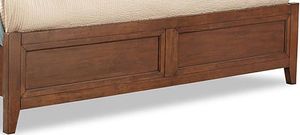
A Tuscan finish sits squarely in the warm mid-tone range, which is the most forgiving family in bedroom furniture and the easiest to coordinate with nightstands you already own. This queen panel bed reads traditional to transitional, so it works as comfortably in a Columbia bungalow as in a newer subdivision bedroom. Warm mid-tones also hide the fine dust that shows immediately on black and espresso finishes, which matters in a room where the furnace runs half the year. It suits a primary bedroom or a well-appointed guest room that needs to look finished without much styling.
Top Features
- Tuscan warm finish: A mid-tone that hides dust and coordinates with most existing warm-toned furniture.
- Queen panel construction: Headboard, footboard, and side rails sized for a queen mattress.
- Traditional to transitional styling: Fits older homes and newer construction equally well.
- Coordinating collection: Part of the San Mateo group, so matching pieces can be added later.
Signature Design by Ashley® Robbinsdale Antique White Queen Storage Panel Bed
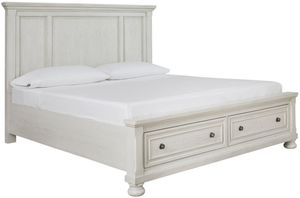
Storage under the bed is the honest answer for the shallow closets in older Missouri homes, and this is the pick for anyone facing that problem. The Robbinsdale pairs an antique white finish with a storage panel design, which means underbed drawers replace a chest of drawers and give back the floor space that chest would have taken. Antique white also brightens a room that fights for daylight, which describes a lot of upstairs bedrooms under deep eaves. Check the drawer glides in the showroom, since a loaded underbed drawer asks a lot of its hardware.
Top Features
- Underbed storage drawers: Closed storage that can replace a chest of drawers in a tight room.
- Antique white finish: A bright, softly aged tone that opens up a dim bedroom.
- Storage panel construction: Panel bed presence with a functional base.
- Small-closet solution: Built for older homes where closet space is the binding constraint.
Archbold Furniture Customizable Emmerson King Panel Bed with Low Footboard
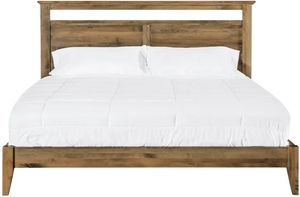
This is the piece that solves two problems at once. The low footboard keeps the walkway at the foot of the bed usable, which is the fix recommended earlier for narrow rooms, and the customizable construction lets you choose the finish rather than accept a stocked one. A king that does not close off the foot of the room is genuinely hard to find, and it matters most in a primary bedroom where you walk past the bed to reach a closet or bath. It suits a shopper furnishing a long-term primary suite who would rather wait for the right finish than settle.
Top Features
- Low footboard design: Preserves the walkway and sightline at the foot of the bed.
- Customizable finish: Choose the finish to coordinate with pieces you already own.
- King panel construction: Full headboard, footboard, and rails scaled for a king mattress.
- Made to order: Our team confirms options and lead time before the order is placed.
aspenhome® Cambridge Classic Cherry Queen Panel Bed
Classic cherry is the traditional end of the finish range, and it is the right call for an older home with substantial trim, hardwood floors, and rooms that already read formal. Fighting a Victorian or a 1920s foursquare with modern minimalism rarely works; matching its warmth does. This queen panel bed brings that depth of color with the panel detailing that suits period architecture, and cherry deepens with age rather than fading. It suits a primary bedroom in an older Sedalia, Kirksville, or Jefferson City home, or anyone building a traditional room deliberately.
Top Features
- Classic cherry finish: A rich traditional tone that deepens over time.
- Period-appropriate styling: Suits older homes with substantial trim and hardwood floors.
- Queen panel bed: Headboard, footboard, and side rails as a complete frame.
- aspenhome bedroom line: Coordinating case pieces available to complete the room.
Elements International Erica Natural Upholstered Queen Platform Bed
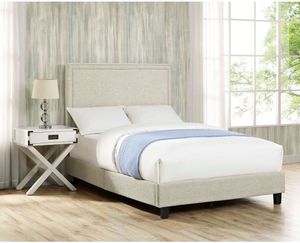
This one is the deliberate alternative in the group. It is an upholstered platform bed rather than a wood panel bed, which means a lower profile, a padded headboard that is far more comfortable to lean against for reading, and a base that supports a mattress without a foundation. The natural fabric tone reads soft and contemporary and coordinates with wood pieces of any undertone, which is useful when the nightstands you already own do not match each other. It suits a small bedroom that needs the lower profile, or anyone who reads in bed and is tired of a wood headboard.
Top Features
- Upholstered headboard: Padded and far more comfortable to lean against than a wood panel.
- Platform base: Supports a mattress directly, so no box spring or foundation is required.
- Natural fabric tone: A soft neutral that coordinates with warm and cool wood pieces alike.
- Lower profile: Keeps a small or low-ceilinged bedroom feeling more open.
Intercon San Mateo Tuscan Queen Standard Panel Bed
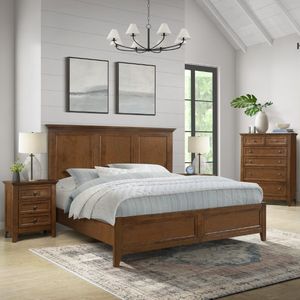
The standard configuration of the San Mateo gives you the same Tuscan finish in a straightforward panel format, which makes it the value-minded entry into this collection. Buying into a collection matters more than it sounds, because it means the nightstands and dresser you add in two years will still be available in the identical finish batch family rather than a near-miss. The warm mid-tone does the same dust-hiding and coordination work as the other San Mateo listing. It suits a guest room, a second bedroom, or a household furnishing in stages on a budget.
Top Features
- Standard panel configuration: A straightforward headboard, footboard, and rail frame at a sensible price point.
- Tuscan warm finish: Consistent with the collection, so added pieces coordinate exactly.
- Collection availability: Matching nightstands and case pieces can be added over time.
- Guest room ready: Finished enough to look intentional without a full room of styling.
Frequently Asked Questions about Panel Beds
A panel bed is a frame built from a headboard, a footboard, and side rails, named for the flat or decorative panels set into the headboard and usually the footboard. A platform bed supports the mattress on its own built-in base, sits lower to the floor, and typically has little or no footboard, while a panel bed may require a separate foundation and generally sits higher.
Some panel beds require a box spring or foundation and some ship with a slat system rated to support a mattress directly, so the requirement depends on the model rather than the category. Check the slat spacing against your mattress warranty, since most foam and hybrid warranties require continuous support with gaps no wider than about three inches.
A panel bed can work well in a small bedroom as long as you choose a low-profile footboard and account for the two to five inches of extra width and four to ten inches of extra length the frame adds beyond the mattress. Stepping down one mattress size to preserve 30 inches of walkway on each side usually produces a better room than squeezing in the larger bed.
The best headboard height is one that stays visible above your pillow stack and leaves comfortable space between its top edge and the ceiling, which generally means a moderate height in rooms with eight-foot ceilings and allows for taller designs at nine feet or above. Also check that the headboard will not cover a window sill, a wall sconce, or the bottom edge of artwork you intend to keep.
Wood panel beds are generally more durable over time because a finished wood surface resists abrasion and soiling that fabric absorbs, and scratches in wood can often be repaired. Upholstered panel beds are more comfortable to lean against and can last just as long in a low-traffic bedroom, provided the fabric is vacuumed regularly and spot cleaned according to its cleaning code.
Most squeaking comes from fasteners that loosened as the wood expanded and contracted, so tightening the rail bolts and confirming the center support legs are making solid contact with the floor resolves the majority of cases. Adding felt or nylon washers at rail joints and waxing hook-style brackets before assembly prevents the wood-on-wood friction that causes the rest.
Build a Bedroom You Love Around the Right Panel Bed
A panel bed anchors the room, and the right one comes down to size, material, and footboard height rather than to style trends. Construction is what makes it last, so check rail thickness, slat spacing, the center support legs, and how the headboard feels once assembled before you decide anything based on the finish. Get those right and the bed outlives several mattresses.
Come see them in person. Shop the panel bed selection online at Missouri Furniture or visit a showroom to compare finishes under real light and feel the difference between a solid rail and a hollow one. Our team knows the lines we carry, will ask about your room dimensions and delivery path before recommending anything, and can walk you through foundation requirements so your mattress warranty stays intact. Our own crews handle delivery and assembly, including the center support legs that so many self-assembled beds are missing, and we are still here for parts and service years later. That is what an independent Missouri retailer offers instead of a flat box and an assembly video.
Why Trust Missouri Furniture
Missouri Furniture is the furniture store of choice for homeowners across Missouri, offering an extensive selection of high-quality furniture, appliances, mattresses, and home essentials. With beautifully designed showrooms, competitive pricing, and a strong commitment to customer satisfaction, Missouri Furniture makes it easy to create a home you love.
Family-owned and locally operated since 1977, Missouri Furniture has built a trusted reputation for exceptional service and quality products. With decades of experience, their team is dedicated to helping customers find the right pieces to match their lifestyle, style preferences, and budget. From comfortable living room furniture and stylish bedroom sets to durable dining collections, mattresses, appliances, and even hot tubs, Missouri Furniture carries a wide range of products from trusted brands. Whether you’re furnishing a new home, upgrading a single room, or designing a custom space, Missouri Furniture offers the selection, expertise, and value you can rely on.
Shop Furniture at Missouri Furniture
Explore a wide selection of quality home furnishings and exceptional customer service at Missouri Furniture. Visit one of their showroom locations throughout Missouri to experience the latest styles, comfort innovations, and home solutions from trusted brands.
Since the beginning, our family-owned business has been dedicated to helping customers transform their houses into homes with personalized service and expert guidance. Their knowledgeable team is ready to help you find the perfect furniture, mattress, appliance, or home accessory to fit your space and lifestyle. Browse the online catalog or contact your nearest Missouri Furniture showroom to get started today.