


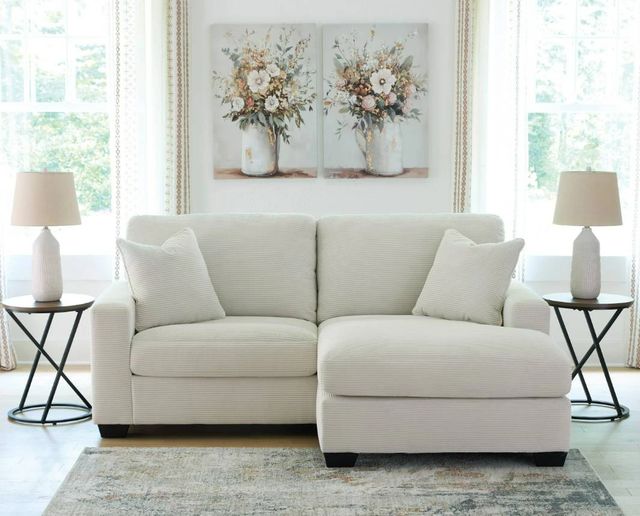
There is blue painter tape on the living room floor in the shape of an L, and it crosses the path from the hallway to the kitchen by about a foot. Somebody has already walked into it twice carrying laundry. The alternative outline, drawn in tape on the other side of the room, is a sofa with chaise that keeps the walkway clear but offers exactly one place to stretch out, and two teenagers have already staked verbal claims on it for movie night. Both shapes fit the room. Only one of them fits the household.
Find the Seating Shape Your Living Room Actually Wants
Missouri Furniture has helped families from Columbia and Jefferson City to Camdenton and Sedalia lay out living rooms for years, with real showroom guidance instead of guesswork. Compare chaise sofas and sectionals in person, then let our team handle delivery, setup, and service after the sale.
The reassuring part is that this decision is decided by measurements and seat counts, not taste, which means it has an answer you can arrive at in an afternoon. At Missouri Furniture, our team walks through room dimensions, traffic paths, and delivery access with shoppers every week across mid-Missouri and the Lake of the Ozarks area. This guide covers how each piece is built, how the terminology on a spec sheet actually works, how to measure your room, the honest differences in seating and comfort, a direct side-by-side comparison, style and scale, long-term value, and a short framework that ends with a recommendation rather than a shrug.
Key Takeaways
- A sofa with chaise is usually one piece: It pairs standard sofa seating with a single extended lounge seat on one frame, which is why it moves and places more like a sofa than a sectional.
- Sectionals buy seats and lose walkways: Two or more connected pieces add seating and visual anchor, but the second leg of an L projects into the room and reshapes traffic flow.
- Orientation is described from where you sit: Left-arm facing and right-arm facing are stated from the seated perspective, which is the single most common ordering mistake in this category.
- Delivery access often decides it: A sectional arrives in pieces and clears tight stairwells and doorways that a long one-piece frame cannot.
What Is a Sofa with Chaise? Anatomy, Sizing, and Terminology
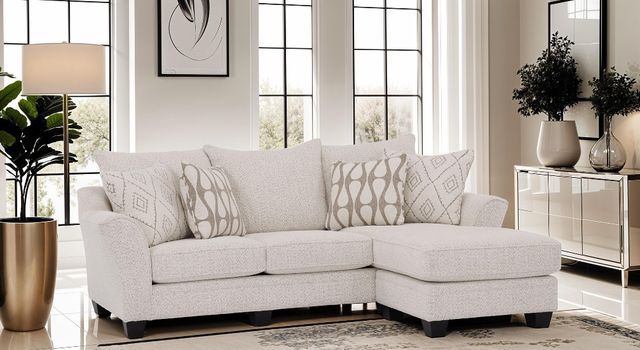
A sofa with chaise is a single, one-piece frame that combines standard sofa seating with one extended lounge seat. The chaise is not attached later and does not detach; the frame is built as one unit, upholstered as one unit, and delivered as one unit. That is the structural difference that drives everything else about how it behaves in a room.
The terminology on product pages is worth decoding before you shop:
- Chaise or chaise lounge: The extended seat with full leg support, deeper than the rest of the sofa.
- LAF and RAF: Left-arm facing and right-arm facing, describing which side the arm sits on.
- Sofa chaise versus chaise sofa: Used interchangeably by most manufacturers, so read the dimensions rather than the name.
- Reversible chaise: A design where the lounge end can be swapped from one side to the other, usually by moving an ottoman-style section and reversing the seat back.
Footprint numbers matter more here than in almost any other seating category. Overall width on a sofa with chaise commonly runs somewhere in the range of a standard sofa, while the depth is the number that separates it from one. A standard sofa is often around 38 to 40 inches deep. At the chaise end, that depth frequently pushes past 60 inches and can exceed 70. When you measure for the room, use the deepest point, not the sofa-end depth, because the chaise is the part that projects into your walkway.
Is a Sofa with Chaise a Sectional?
This is the biggest point of confusion in the entire category, and the honest answer is that it depends on the specific piece. Many chaise sofas are one-piece frames and are not sectionals at all. Others are two-piece chaise sectionals, where the chaise section connects to the sofa section with brackets or hooks and arrives as two boxes.
Tell them apart on a product page by looking for three tells: a shipping description that mentions two cartons or two pieces, dimensions listed separately for a sofa section and a chaise section, and any mention of connectors, brackets, or a reversible configuration. A single set of dimensions and one carton means one frame.
One practical note that saves a lot of returns: manufacturers describe orientation from the seated perspective, not from where you stand looking at the sofa. A right-arm facing chaise means the chaise is on your right when you are sitting on the sofa, which puts it on your left as you face the piece from across the room. Stand where the sofa will go, sit down mentally, and then decide.
What Is a Sectional Sofa? Configurations, Modularity, and Layout Options
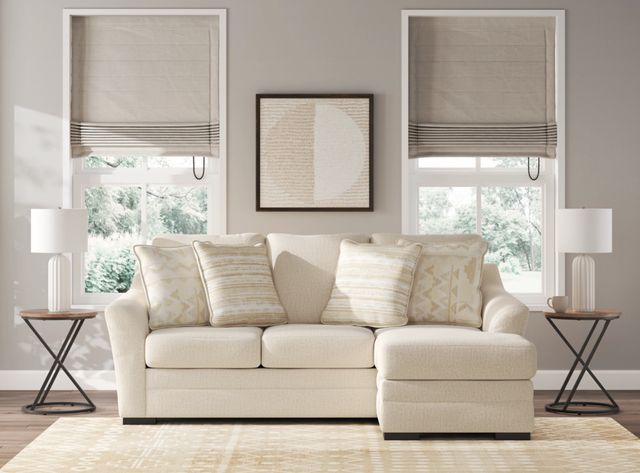
A sectional sofa is a seating group built from two or more connected pieces. The connection is what defines it, and the configurations available cover a much wider range than most shoppers expect:
- Two-piece L-shape: A sofa section and a chaise or loveseat section, the most common form.
- Three-piece L-shape: Adds an armless section or a corner wedge for more length.
- U-shape: Seating along three sides, which claims two or three walls of a room.
- Pit and modular systems: Independent seats that connect in many arrangements and can be rearranged later.
- Function sectionals: Configurations with built-in reclining seats, a storage console, a cupholder console, or a sleeper section.
The component vocabulary is standard across most brands. An armless chair is a seat with no arms used to extend a run. A corner wedge is the square or angled piece that turns the corner. A cuddler is an oversized rounded corner seat. A loveseat section is a two-seat run. Ottomans sometimes connect to complete a chaise. Connectors, brackets, and interlocking hooks hold the pieces together, and the quality of that hardware determines whether the sections drift apart with use.
Sectionals scale by adding width per section, which is why a U-shape can take over an entire room. Open-concept great rooms suit them well because there is no doorway competing for the second leg. Closed rooms with multiple doorways are where sectionals cause problems, since each additional entry point limits where the corner can land.
The flexibility argument deserves honesty. Genuinely modular systems can be rearranged into different shapes years later. Most standard two-piece and three-piece L-shaped sectionals cannot; they are fixed once positioned, and reversing the chaise side is either impossible or requires a specific reversible design. Read the product page rather than assuming.
The Delivery Advantage Nobody Thinks About Until Delivery Day
Sectionals arrive in pieces, and pieces fit through doorways and up stairwells that a long one-piece frame cannot survive. A 95-inch chaise sofa is a single rigid object that has to clear every turn intact. A two-piece sectional of the same total length arrives as two shorter, lighter units. In older homes with narrow stairs, in walkout basements with a landing turn, and in lake condos with tight entries, that difference decides whether the piece gets into the room at all.
Read More: Reclining Sectional Sofa Guide to Styles, Sizes & Features | Ashley Furniture Reviews: What to Know Before You Buy
How to Measure Your Room and Choose the Right Fit
Measuring properly takes about fifteen minutes and prevents the most expensive mistake in furniture buying. Work through it in order.
- Measure each wall length individually and sketch the room, marking every doorway, window, closet, vent, and outlet.
- Note where the television or fireplace sits, since that determines which wall the seating faces.
- Identify the main traffic path through the room and any secondary paths, and mark them on the sketch.
- Measure the front door width, interior door widths, hallway width, and the diagonal clearance at every stair turn.
- Tape the full footprint of each option on the floor, including the chaise projection, and live with it for a day.
Leave about 30 to 36 inches for a main traffic path and roughly 24 inches for a secondary one. Between the seat front and a coffee table, 14 to 18 inches keeps the table reachable without becoming a shin hazard.
The chaise end is where walkways fail. A standard sofa sits against a wall and projects about 40 inches into the room. A chaise projects 60 or more inches at one end, which is enough to cross a path that a regular sofa would clear. If the chaise end lands near the room’s entry, expect a bottleneck.
Always measure the deepest point rather than the average depth, and always measure the diagonal on stairwells and hallway turns rather than the straight width. Cardboard cutouts work even better than tape when a room is crowded, because they show height and bulk instead of just footprint.
Quick Cues by Room Type
- Narrow rectangular living rooms: A sofa with chaise on the long wall usually beats an L-shape that pinches the room.
- Open-concept great rooms: Sectionals define zones and hold visual scale against tall walls.
- Apartments and condos: A one-piece chaise sofa or a compact two-piece sectional, chosen after the delivery path is measured.
- Bonus rooms and finished basements: Sectionals win, because the pieces get down the stairs.
- Rooms with a centered fireplace: A chaise sofa keeps sightlines to the hearth open, while a U-shape often blocks one side.
Seating Capacity, Comfort, and How Real Households Use Each Option
Manufacturer seat counts are optimistic, and the optimism concentrates in exactly two places: corner seats and chaise seats. A sectional advertised as seating six is often comfortable for four adults, because the corner wedge puts one person’s knees into another person’s hip and the chaise is used by one person lying down rather than two people sitting.
A sofa with chaise realistically seats three comfortably: two on the sofa portion and one on the chaise. It can seat four in a pinch if the chaise is used as an upright seat, which nobody does voluntarily once they have discovered leg support.
Comfort differs in kind, not just degree. The chaise gives full-body leg support in one dedicated position, which is unmatched for reading or watching a screen. A sectional corner allows a person to stretch out diagonally and lets two people lounge at once from opposite ends. For overnight guests, a sectional with a wide chaise or a sleeper section is more usable than a standard chaise sofa, though neither replaces a proper guest bed.
How Different Households Actually Use Each One
- A couple who watches television nightly: A sofa with chaise is usually ideal, with one lounger and one upright seat.
- A family with children and pets: A sectional distributes bodies better, and washable performance fabric matters more than shape.
- Someone who entertains large groups: A sectional or U-shape gives seat count and encourages conversation.
- A household with one dedicated lounger: A chaise sofa, full stop, because the chaise belongs to one person anyway.
Sightlines matter to how a room feels. A U-shaped sectional turns seating inward and favors conversation, since everyone faces the middle. A sofa with chaise faces one direction and favors screen viewing, which is why it is the default choice in rooms built around a television.
The friction point almost no guide mentions is what happens when two people both want the chaise. In a household of three or more, a single chaise creates a nightly negotiation. The practical workaround is to pair a sofa with chaise with a large upholstered ottoman that a second person can put their feet on, or with a swivel accent chair that has its own footstool. That combination delivers two lounge positions for less money and less floor space than upgrading to a sectional.
Style, Scale, and Visual Weight in Your Living Room
The two options read differently before anyone sits down. A sofa with chaise typically reads lighter and more tailored, because it occupies one wall and one corner of the floor rather than turning a corner architecturally. A sectional reads as built-in, anchoring a room the way a large area rug does, which is either exactly what an open great room needs or exactly what a small room cannot afford.
Base design changes perceived bulk more than color does. Exposed legs let you see floor underneath the piece, and visible floor reads as space. A skirted base or a platform base that meets the floor reads heavier and larger, even at identical dimensions. In a small room, tapered exposed legs can make the difference between a sofa that fits and a sofa that looms.
Upholstery choices carry real weight too. Performance fabrics have become the default for households with kids and pets, and they now come in textures that do not look institutional. Leather reads more formal and more architectural, which amplifies the anchored feeling of a sectional. Lighter tones and smaller-scale textures reduce perceived bulk; large-scale patterns and very dark solids increase it.
Arm style is the overlooked variable. Track arms are narrow and preserve usable seating width. Rolled and flared arms add visual softness and consume several inches per side, which on a 90-inch sofa can mean losing most of a seat. If seating capacity is tight, measure the inside seating width rather than the overall width.
Everything else in the room follows from this choice. A sofa with chaise usually wants a rectangular rug that runs under the front legs, a coffee table set off to the sofa side rather than centered on the chaise, and one or two accent chairs to complete a conversation group. A sectional usually wants a large rug that sits under the whole footprint, a round or oval ottoman rather than a rectangular table, and far fewer additional pieces.
Watch ceiling height and windows. A tall-backed sectional in a room with eight-foot ceilings can make the walls feel shorter, and a high back placed under a low window blocks light and looks wrong from outside the house. In rooms with low ceilings or low sills, favor lower back heights on either option.
Read More: Stylish Living Room Table Sets for Different Needs | 7 Dining Room Accent Chairs That Add Style and Comfort
Sofa with Chaise vs Sectional Sofa: Side-by-Side Comparison
| Factor | Sofa with Chaise | Sectional Sofa |
|---|---|---|
| Construction | Usually one frame, one piece | Two or more connected pieces |
| Typical overall width | Similar to a standard sofa | Wider, grows with each section |
| Depth at deepest point | Roughly 60 to 70 inches at the chaise | Similar depth, plus a second leg |
| Realistic seating | Two to three adults | Four to six, corners count generously |
| Best room size and shape | Small to medium, rectangular | Medium to large, open concept |
| Effect on traffic flow | One projection into the room | Reshapes two sides of the room |
| Reconfiguration | Fixed unless reversible | Modular systems only |
| Delivery through tight spaces | Harder, one rigid frame | Easier, arrives in sections |
| Visual weight | Lighter, more tailored | Heavier, anchors the room |
| Common upgrades | Reclining seats, storage chaise | Recliners, power headrests, console, sleeper |
| Price positioning | Generally lower | Generally higher, scales with sections |
| Best-fit buyer | Couples, small rooms, screen-focused | Families, entertainers, open great rooms |
Three rows decide this for most people. If the delivery path is tight, the sectional gets in and the one-piece chaise sofa may not. If the room is under about 13 feet across, the chaise sofa keeps the walkway and the sectional does not. And if more than three people sit down on a typical evening, the seat count settles it regardless of everything else.
Sofa with Chaise Pros and Cons Every Shopper Should Weigh
These two pieces solve different problems rather than competing for the same job. The trade-offs come down to floor space, how many people sit down on a normal night, how much you value the ability to rearrange later, and how long you plan to keep the piece. Here is the case for and against the chaise sofa specifically, measured against a sectional.
Pros
Fits rooms a sectional would swallow
One projection instead of two keeps a modest living room walkable.
Reads lighter in the room
A single tailored frame does not visually claim the floor the way an L-shape does.
Simpler to place and style
One wall, one corner, and a straightforward rug and table plan.
Usually the lower price
Fewer sections, less material, and a lower typical entry point than a comparable sectional.
Uncompromised lounging
The chaise gives full leg support in the position it was designed for, without a corner seat compromise.
Cons
Fewer seats
Three comfortable spots is the realistic ceiling, which strains in a household of four or more.
The chaise side is usually permanent
On non-reversible models, the orientation you order is the orientation you keep, so a future room change may not accommodate it.
What Mid-Missouri and Lake of the Ozarks Homes Do to This Decision
Housing here pushes back on seating choices in ways a national buying guide never accounts for. Around the Lake of the Ozarks, near Camdenton, a huge share of the housing stock is built into steep lakefront slope, which means walkout lower levels, exterior stairs down to the entry, and interior stairs with a hard turn at the landing. Those homes almost always end up with the main gathering room on the lower level facing the water, and getting a 95-inch one-piece frame down there is frequently impossible. In Columbia and Jefferson City, the older bungalows and 1920s foursquares near the historic cores have front doors under 32 inches and living rooms with three doorways, so the second leg of an L-shape has nowhere to land. Newer construction around Ozark, Sedalia, and Washington leans toward two-story great rooms and open kitchen-to-living layouts, where a sectional finally has room to work and a standard sofa can look undersized. Add Missouri’s humidity swing, from muggy July air to bone-dry January furnace heat, and materials matter too: leather and tightly woven performance fabrics handle that cycle better than loose-weave natural fibers that expand and slacken with the seasons.
Here is the maintenance habit our delivery crews mention to every chaise sofa buyer, because it is the one thing that determines whether the piece still looks right in year five: rotate and flip the chaise seat cushion once a month, and swap it with a sofa-section cushion twice a year if the covers are the same size. A chaise is used in one position by usually one person, so its foam compresses far faster than the seats beside it, and an unrotated chaise cushion develops a visible dip within two years that no amount of fluffing corrects.
- Lakefront walkout levels: Choose a sectional or a chaise sofa with a removable back, and measure the landing turn diagonally.
- Older Columbia and Jefferson City homes: Measure the front door and every interior doorway before falling in love with a one-piece frame.
- Open great rooms in newer subdivisions: A sectional holds scale where a standard sofa reads small against a tall wall.
- Screened porches and three-season rooms: Humidity swings favor performance fabric or leather over loose natural weaves.
- Homes with wood stoves or fireplaces: Keep leather several feet from direct radiant heat, which dries hides faster than sunlight does.
- Rental and lake-house furnishing: Sectionals with removable, washable covers survive turnover traffic better than fixed upholstery.
Read More: Why Missouri Furniture Has Been a Family Favorite Since 1977 | Transform Your Home with Our Unbeatable Furniture Selection
Top Sofa with Chaise and Sectional Picks at Missouri Furniture
Every piece below is a chaise sofa, so the comparison above points directly at this lineup. They vary by upholstery, color forgiveness, and whether the cover is chosen by you or already set, which is exactly how to narrow them down.
Stanton™ Customizable 557 Chaise Sofa
Choosing your own cover changes the entire calculation on a piece you will keep for a decade. This customizable Stanton chaise sofa lets you select the upholstery rather than accepting whatever a warehouse stocked, which means a household with a golden retriever can specify a durable performance weave and a formal sitting room can specify something finer. That flexibility also solves the color-forgiveness problem discussed earlier, since you pick the tone that suits your light and your traffic. It suits shoppers who know what they want and would rather wait a few weeks than compromise.
Top Features
- Customizable upholstery: Select the fabric to match your household’s real use rather than a stocked default.
- Chaise configuration: Standard sofa seating paired with one full-support lounge seat.
- Special order flexibility: Ordered to your specification, which our team walks you through in the showroom.
- Long-horizon choice: Choosing the cover yourself makes the piece easier to live with over many years.
Stanton™ Customizable 633 Chaise Sofa
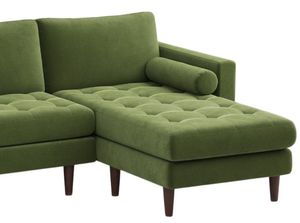
A second customizable frame in the Stanton line gives you a different silhouette to compare against the first, which is the point of visiting a showroom rather than a website. Because both are ordered rather than stocked, the decision comes down to which frame proportions suit your room and which seat depth suits your body, and those are things you settle by sitting down. This is a strong option for a formal living room in an older Columbia or Jefferson City home, where a tailored frame reads better than an oversized one.
Top Features
- Choose-your-own cover: Fabric selection made at order time rather than dictated by stock.
- Distinct frame proportions: A different silhouette from the 557, worth comparing side by side in person.
- One-piece chaise design: Sofa seating and lounge seat on a single frame.
- Made to order: Our team confirms lead time and cover options before the order is placed.
Benchcraft® Lango Jute Sofa Chaise
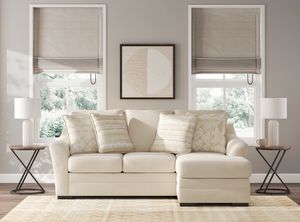
Jute is one of the most practical colors in upholstery, and that is the argument for this piece. A warm, mid-tone natural shade hides everyday soil far better than a pale cover and hides dust and pet hair far better than a dark one, which puts it in the forgiving middle range described earlier. The sofa chaise format keeps the footprint manageable, making it a sensible fit for a medium living room where a sectional would cross the walkway. It suits a family room that gets daily use rather than a formal space that gets weekend use.
Top Features
- Jute-toned cover: A forgiving mid-tone that hides both soil and dust better than lighter or darker extremes.
- Sofa chaise format: One extended lounge seat with standard sofa seating alongside it.
- Everyday family use: Built for a room where people sit every evening.
- Manageable footprint: Fits medium rooms where an L-shaped sectional would pinch a traffic path.
Signature Design by Ashley® Amesley Ivory Sofa Chaise
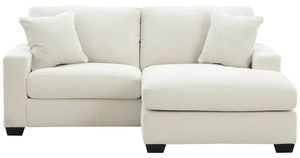
Light upholstery makes a room feel larger, and in a Missouri house with deep porches or heavy summer tree cover, that matters more than it does in a sun-flooded showroom. This ivory sofa chaise brightens a room that fights for daylight, and the light tone visually reduces the bulk of the chaise projection. The honest trade-off is maintenance, so this is the piece to pair with a protection plan conversation and a clear cleaning code. It suits a formal living room, a sitting room, or an adults-only household where the sofa is not also a snack table.
Top Features
- Ivory cover: A bright neutral that opens up a room with limited natural light.
- Reduced visual bulk: Light tones make a deep chaise read smaller than a dark cover would.
- Sofa chaise configuration: Full leg support at one end with conventional seating alongside.
- Formal room fit: Best suited to spaces with lighter daily traffic.
Signature Design by Ashley® Gardiner Pewter Chaise Sofa
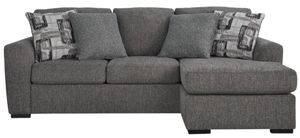
Pewter is the most versatile gray family in upholstery because it carries a slight warmth that keeps a room from feeling cold, which is a real consideration in a house that runs a furnace from November through March. This chaise sofa is the safe center of the lineup, coordinating with warm oak floors, cool gray plank, and almost any wall color without a second thought. That makes it a strong pick for anyone furnishing a room in stages who does not yet know what the rug and the chairs will be. It works equally well in a great room and a mid-sized living room.
Top Features
- Pewter gray cover: A warm-leaning neutral that coordinates with both warm and cool room palettes.
- Chaise sofa layout: Extended lounge seat plus standard sofa seating on one frame.
- Easy to build around: A neutral base for a room being furnished in stages.
- Broad room compatibility: Suits great rooms and mid-sized living rooms alike.
Signature Design by Ashley® Genoa Steel Chaise Sofa
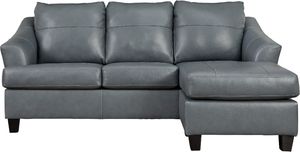
Cool-toned rooms need cool-toned seating, and a steel cover is the answer for spaces with gray luxury vinyl plank, white trim, and north-facing windows. Trying to warm those rooms with a beige sofa is the near-miss mistake that makes a room look unfinished, and a deliberately cool gray reads intentional instead. The chaise sofa format keeps the piece from overwhelming the room, which suits the open kitchen-to-living layouts common in newer construction around Ozark and Washington. Pair it with a textured rug and warm wood accents for balance.
Top Features
- Steel gray cover: A deliberately cool neutral for rooms with gray flooring and white trim.
- Chaise configuration: One dedicated lounge position with sofa seating beside it.
- Modern room fit: Suits open kitchen-to-living layouts in newer homes.
- Balanced scale: Substantial without the two-sided footprint of a sectional.
Signature Design by Ashley® Hazela Charcoal Sofa Chaise
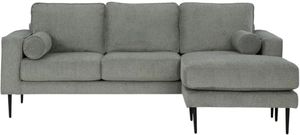
Charcoal is the choice when the room does double duty as a media room, because a dark cover absorbs light instead of bouncing it back at the screen. It is also the most forgiving option for spills and for households where drinks travel between the kitchen and the sofa, which describes a lot of walkout lower levels around the Lake of the Ozarks. The honest counterpoint is that charcoal shows dust, lint, and light-colored pet hair, so plan on a soft brush attachment and a weekly pass. It suits basement family rooms, media spaces, and households with darker-coated pets.
Top Features
- Charcoal cover: Absorbs light, which suits rooms used for watching movies.
- Spill forgiving: Dark upholstery hides staining far better than light covers.
- Sofa chaise format: Full leg support at one end without a sectional footprint.
- Lower-level friendly: A practical choice for walkout basements and media rooms.
Frequently Asked Questions about a Sofa with Chaise
A sofa with chaise is not automatically a sectional, since many are built as a single one-piece frame with the lounge seat integrated into the sofa. Some chaise designs are sold as two-piece chaise sectionals that connect with brackets, so check whether the product page lists two cartons or separate section dimensions to tell which one you are looking at.
A sofa with chaise is generally a strong choice for a small living room because it projects into the room at only one end rather than turning a corner like a sectional. Measure the deepest point at the chaise, commonly 60 inches or more, and confirm you still have roughly 30 inches of walkway on your main traffic path.
LAF means left-arm facing and RAF means right-arm facing, and both are described from the perspective of someone sitting on the sofa rather than looking at it. Stand where the piece will go, imagine sitting down, and note which hand the chaise falls on, because reversing that perspective is the most common ordering mistake in this category.
Plan for roughly 30 to 36 inches of clearance on main traffic paths and about 24 inches on secondary paths, plus 14 to 18 inches between the seat front and a coffee table. A sectional needs that clearance on two sides of the room instead of one, which is why it demands significantly more total floor area than its footprint alone suggests.
A sofa with chaise comfortably seats about three adults, two on the sofa portion and one on the chaise, while a sectional advertised for six is usually comfortable for four. Corner wedge seats and chaise seats are both counted generously by manufacturers and used by a single person in practice.
Only reversible chaise designs and genuinely modular sectionals can be reconfigured after purchase, and most standard two-piece and three-piece L-shaped sectionals are fixed once positioned. Confirm reversibility on the product page before ordering, because a non-reversible chaise commits the room to that orientation for the life of the piece.
Sofa with Chaise or Sectional: Bring Your Living Room Together
The decision comes down to three things: the size and shape of the room, how many people genuinely sit down on a typical evening, and how much flexibility the household wants in the years ahead. A sofa with chaise keeps a modest room walkable and gives one person a proper lounge position. A sectional buys seats and anchors a large open space, and it gets into houses with tight stairs that a one-piece frame cannot reach. When the answer lands between them, a two-piece chaise sectional is the smart compromise, since it delivers the chaise format with sectional delivery access.
Come sit on both. Shop chaise sofas and sectionals online at Missouri Furniture or visit a showroom to compare seat depth and back height in person, because comfort at these depths varies more between brands than any spec sheet suggests. Our team knows the lines we carry, will ask about your room dimensions and your delivery path before recommending anything, and can order custom fabric when the stocked cover is not the right one. Our own delivery and setup follows, along with local service and support after the sale, which is what an independent Missouri retailer offers instead of a box on the driveway and a return label you will never use.
Why Trust Missouri Furniture
Missouri Furniture is the furniture store of choice for homeowners across Missouri, offering an extensive selection of high-quality furniture, appliances, mattresses, and home essentials. With beautifully designed showrooms, competitive pricing, and a strong commitment to customer satisfaction, Missouri Furniture makes it easy to create a home you love.
Family-owned and locally operated since 1977, Missouri Furniture has built a trusted reputation for exceptional service and quality products. With decades of experience, their team is dedicated to helping customers find the right pieces to match their lifestyle, style preferences, and budget. From comfortable living room furniture and stylish bedroom sets to durable dining collections, mattresses, appliances, and even hot tubs, Missouri Furniture carries a wide range of products from trusted brands. Whether you’re furnishing a new home, upgrading a single room, or designing a custom space, Missouri Furniture offers the selection, expertise, and value you can rely on.
Shop Furniture at Missouri Furniture
Explore a wide selection of quality home furnishings and exceptional customer service at Missouri Furniture. Visit one of their showroom locations throughout Missouri to experience the latest styles, comfort innovations, and home solutions from trusted brands.
Since the beginning, our family-owned business has been dedicated to helping customers transform their houses into homes with personalized service and expert guidance. Their knowledgeable team is ready to help you find the perfect furniture, mattress, appliance, or home accessory to fit your space and lifestyle. Browse the online catalog or contact your nearest Missouri Furniture showroom to get started today.